If you only read one thingThe Most Valuable Commodity in the World is Friction (20 minute read) “we have a world where friction gets automated out of experiences” Woha! “AI is the newest terrain in a decades-long race to eliminate all forms of cognitive resistance” Woha! “I think what we’re witnessing isn’t just an extension of the attention economy but something new - the simulation economy. [..] It’s about convincing you that any sort of real-world effort is unnecessary, that friction itself is obsolete” Triple Woha! Ok, now go read the article. Bonus points for figuring out what this has to do with your CTO job, not only your life. https://kyla.substack.com/p/the-most-valuable-commodity-in-the
Stories I’ve enjoyed this weekNobody Codes Here Anymore (12 minute read) Real discussion of real usage of AI tools (Claude Code + Cursor). Many things are the same I have experienced, but from a different angle. “Our head of product is a reformed lawyer who taught himself to code while working here. He’s shipped 150 PRs in the last 12 months. [..] The product manager he sits next to has shipped 130 PRs in the last 12 months. [..] We built a new product for a new region with a single developer working solo” People can have a huge impact, not sure about maintainability but shipping something that can be moved forward, yes! About bugfixing “All you are really doing here is hoping that the Linear ticket is enough that the agent can work out the bug and fix it.” Something I’ve been saying for months now, requirements in text - or in this case bug reports - become more important, because then the AI can work on its own - without me translating and adding something for the prompt. Less friction wins. “not realize that the tests are garbage and the fix is wrong.” Recently I had a discussion with a client on how to look at AI generated code. I said “give me the test cases” and I review them, instead of the code. “Our heaviest users are using $50/month of tokens. That’s a lot of tokens. [..] I asked our CFO and he said he’d be happy to spend $100/dev/month on agents. To get 20% more productive that’s a bargain.” and more great stuff. ❤️ https://ghiculescu.substack.com/p/nobody-codes-here-anymore Are We Really Engineers? (21 minute read) Are software engineers really engineers? The article has a point when it tells us that software developers who say engineering is different don’t know what engineering is, or have many misconceptions. Valid point. The author interviewed 17 real engineers who got into software engineering. My opinion is different: We can be engineers, but engineering is holding us back. Mostly due to two things. Because software is not physical, there is no meaningful constraint to dependencies. A class can depend on a hundred other classes, way beyond being manageable. And it’s not clear where the breaking point is - and we even do not agree where it can be. Second, software development has no media break. It’s a string of transformation. It does not go from information to physical at one point. So there is no clear reference point, no clear boundary as with physical work. Is a programming language the boundary? Or is it executable UML? What is a compiler? Should the compiler check for errors or a linter? We can move everything wherever we want. It would have been much more interesting if the article author had interviewed 17 experienced software developers who moved into (electrical, chemical, ..) engineering. https://www.hillelwayne.com/post/are-we-really-engineers/ Product Purgatory: When they love it but still don’t buy (10 minute read) The biggest problems I see with startups and “scaleups”, they do not have PMF and ruthlessly focus on getting it. Some have, but they think this is where the hockey stick starts. But they don’t get to “Traction” (next phase in my 7P model). And they are stuck in “Product Purgatory”. Great article on what it is and how to get out of it. ❤️ it. “For products in purgatory, the key question isn’t whether customers see value, but rather which customers are ready to buy now.” Traction. https://longform.asmartbear.com/purgatory/ Team Autonomy and AI (3 minute read) “The result is that while the team may be empowered, they still feel frustrated by the lack of autonomy. Legacy systems, older team topologies, the limitations of cognitive load, and specialized languages or technologies that not all the engineers have been trained on, contribute to the lack of autonomy.” With AI around, these limiters on autonomy are going away says the article, and therefore team autonomy increases, an interesting thoug https://www.svpg.com/team-autonomy-and-ai/ Microservices Are a Tax Your Startup Probably Can’t Afford (19 minute read) What I found refreshing, what I ❤️ about that article is it goes way beyond “Microservices are bad!” - and dives deep into why and concrete results of using Microservices. You can copy them into your ADRs (you do ADRs, don’t you?) If you then come to the conclusion that you still net benefit from them, go ahead! https://nexo.sh/posts/microservices-for-startups/ Reading ‘Business’ Books Is A Waste Of Time (7 minute read) Most books I read are a waste of time. Often I don’t finish them. The main reason is that most books have one idea that could be a one-pager. But you can’t sell those (I try to sell small, non-bloated books for $4.99 each, but this is not what people expect). So people make a book out of one idea, Malcolm Gladwell being the prime example. To the article: Books do not make you great, at least not those books for easy reading (a COGS, CAPEX and EBITA book will - but hard to read and boring). BUT I disagree with the article, from each of those books I have taken one long-lasting idea. Start with the why for everything. Have processes around promotion and salary raises. https://theorthagonist.substack.com/p/why-reading-business-books-is-a-waste How to Harden GitHub Actions: The Unofficial Guide (13 minute read) CTOs ask me how to start with security. There are many ways to get going, this is one of them, hardening your GitHub actions, when we have seen supply chain attacks and credential leaks with GitHub actions. https://www.wiz.io/blog/github-actions-security-guide system_prompts_leaks/claude.txt at main · asgeirtj/system_prompts_leaks (15 minute read) A peek behind the curtain. What are system prompts? System prompts are the prompts that are wrapped around everything you say to an AI. They are guard rails, they help to create that neat output. There are many AHA! moments in there, like “Aha, this is why ChatGPT acts this way”. One mundane example: “Then explore Excel files structure: - Print workbook metadata: console.log(workbook.Workbook)”. There is a lot of water cooking involved in LLMs it seems. https://github.com/asgeirtj/system_prompts_leaks/blob/main/claude.txt
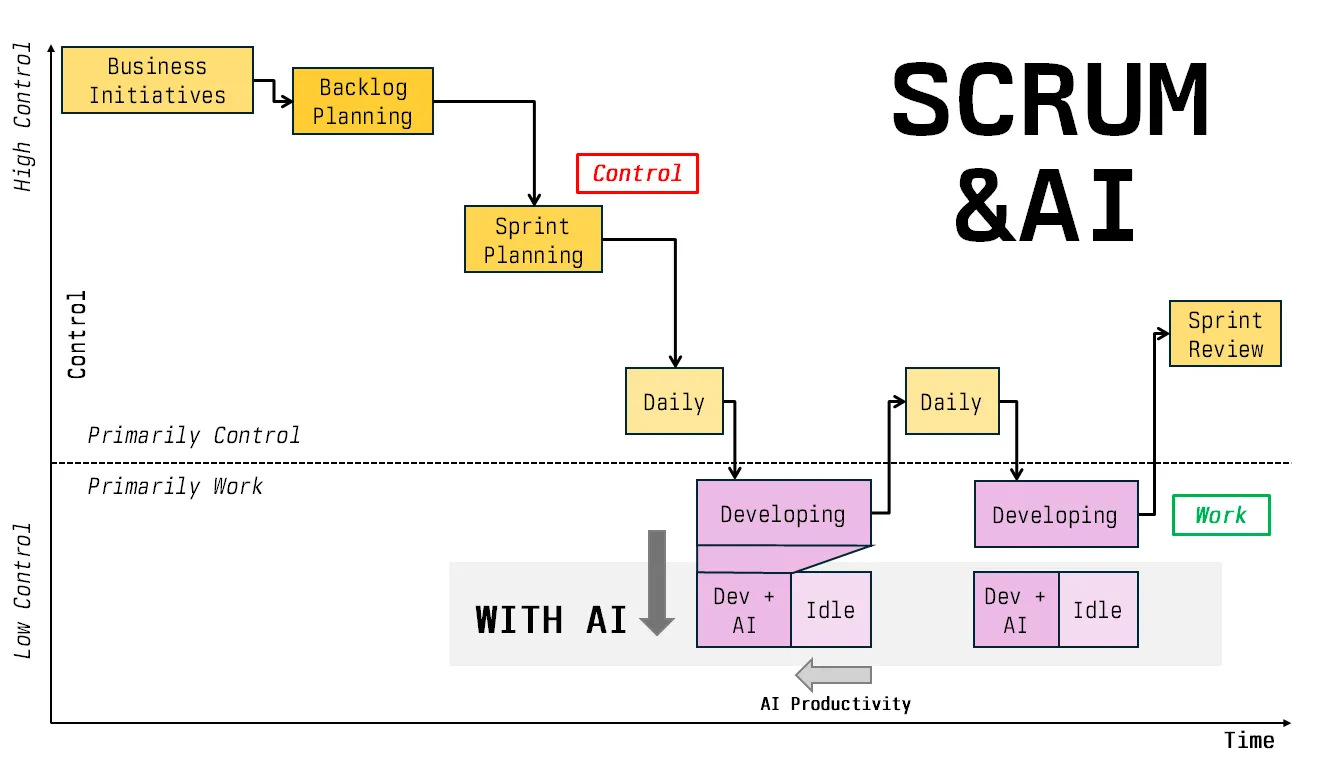
https://www.tabulamag.com/p/scrum-was-hit-by-the-perfect-storm Join the CTO newsletter! | | |||||||||