If you only read one thingThe Importance of Mastering Context in Effective Leadership (25 minute read) Many good points about leaders and context, as in “Leaders as managers of meaning and co-constructors of reality” As I talk with coachees, managers are the new shamans, they give context and tell a story to make sense of the world, why the moon goes up and the sun goes down, and people feel safe. Or “In many ways, leaders automatically have more context than their teams. Not only are they one level removed but they are also embedded within other numerous and larger networks than their teams are. Assuming that our teams have that same context is a classic mistake.” https://www.leadingsapiens.com/mastery-of-context-in-leadership/ Graph of the week
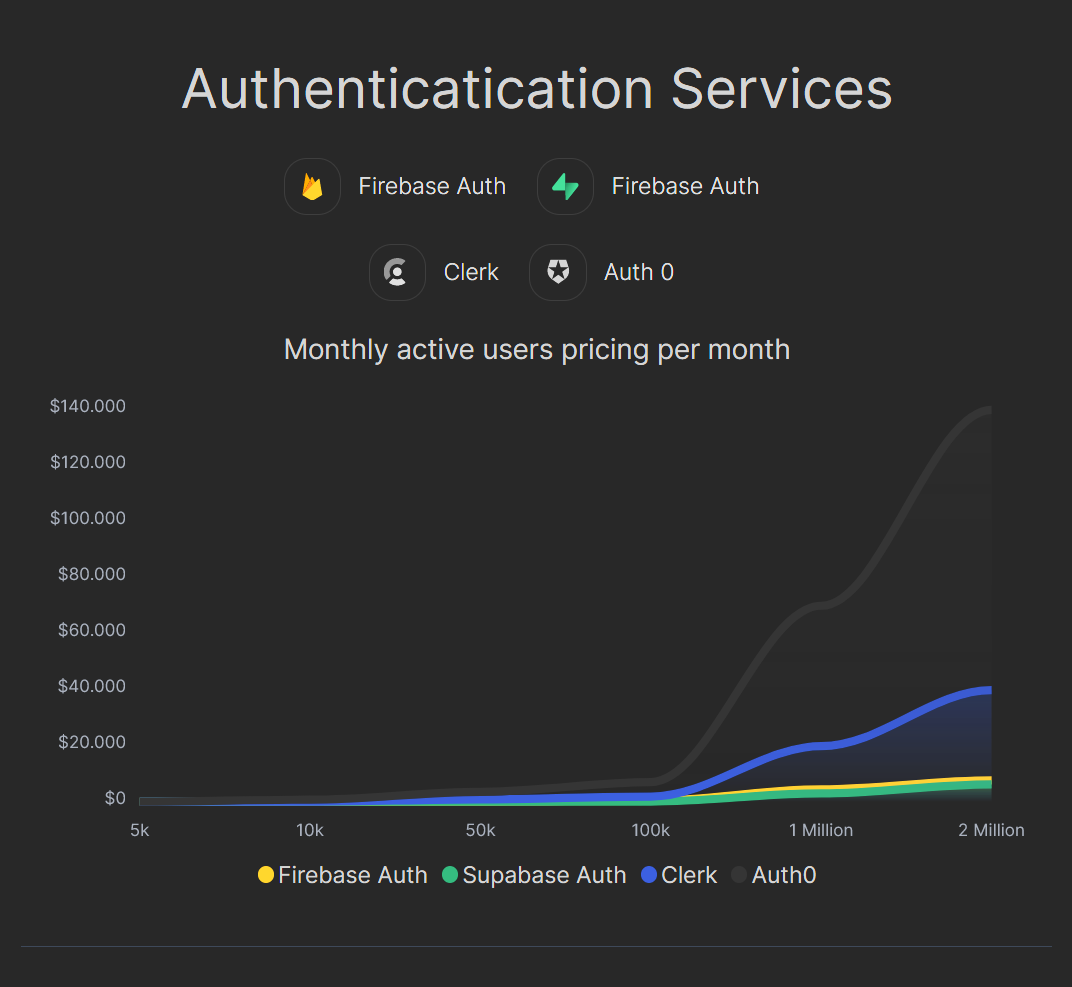
Does it scale - Build what you want without the unknowns Very clever website to compare pricing of SaaS services based on the payment metric, e.G. number of users. For now, it has email and authentication. I assume they will add more comparisons fast. Also, nice design. Video of the weekThis was eye-opening for me, HEUREKA! The great Jim Keller (CPU/GPU genius) makes this interesting observation. Comparing an AI model to a program in C, and people thought C would be predictable. The opposite is true! The AI model has a clearly defined error, the 5 billion lines of C, no one knows how it reacts. Also, “I’m not afraid of the 800-pound gorillas, they don’t move that fast.” Neither am I. https://www.youtube.com/live/OnVUXC9Fou4?si=PZt_d5eHPhKyZA1R&t=2887
Stories I’ve enjoyed this weekBuilding Bluesky: a Distributed Social Network (Real-World Engineering Challenges) (45 minute read) A very detailed description of the experience of building something with many users in a short amount of time, with few people. Including “Development timeline” with its three phases, “Scaling”, “Federation”, “Architecture”, “Refactorings”, “Database” and more. This can act like a blueprint, a guiding plan or inspiration. Great read. https://newsletter.pragmaticengineer.com/p/bluesky?publication_id=458709 10 Big Lessons from Hackfwd (25 minute read) I was honored to participate in Hackfwd ten years ago. It was the only accelerator I have seen that was outstanding. Met some really great people I’m still friends with. My favorite learning, “1. Geeks Can Be CEOs” YES! The CTO: A start-up’s hardest position (14 minute read) I agree, though ask my wife, being startup CEO isn’t easy either, for different reasons. The challenge in the CTO role is that it rapidly changes every six months. From coder, to hiring manager, manager, team builder, managing through people, process guy, scaling architect and executive strategist. All while the application is on the edge of crashing due to rapid customer growth and constant pressure from the CEO to deliver features faster, “or the company will not survive!” https://blog.outstride.co/the-cto-a-start-ups-hardest-position-3a87064dfad2 The only two log levels you need are INFO and ERROR (9 minute read) Usually there is no guidance on log levels in startups from the CTO. Log levels are
all over the place, just put everything in DataDog. Things are not logged at all,
some have the wrong level. Just like with project status, every log level needs to
be actionable. What does https://ntietz.com/blog/the-only-two-log-levels-you-need-are-info-and-error/ I love programming but I hate the programming industry (6 minute read) THIS *“Essentially, the concept of critical thinking has been made anathema to engineering: as a programmer you are to focus solely on the how, rarely on the what, and certainly never on the why. [..] A code monkey is prohibited, from even identifying the lack of autonomy and creativity inherent to the position”. Developers are driven to code shallow features, no thinking needed, that have no impact in the world. Developers have been robbed of creativity. When in the eighties developers coded their own ideas, with Scrum they lost that ability and became an execution machine to code other peoples ideas. Good thing, this propelled open source to the top. Bad, most developers lost their creativity. Take.it.back! https://www.deathbyabstraction.com/I-love-programming-but-I-hate-the-programming-industry Why you need a ‘WTF Notebook’ (10 minute read) “Every time I join a new team, I go to the next fresh page, and on top of that page I write: “WTF - [Team Name].” Then I make a note every time I run into something that makes me go “wtf,” and a task every time I come up with something I want to change.” I tell new hires that they need to pay attention and write down everything that confuses them (“WTF”) and we talk about it after a month. After that it’s too late, they have become part of the #WTF. https://www.simplermachines.com/why-you-need-a-wtf-notebook/ OKRs and Product Roadmaps (15 minute read) Too many people still struggle with OKRs: Combining road maps and OKRs. https://www.romanpichler.com/blog/okrs-and-product-roadmaps/ My book is available now“If you have only time to read a single book about engineering management - try this one” Christian Küchler, Director Software Engineering @ Solactive AG
Join the CTO newsletter! | |